




What are the sources most used by researchers and other professionals to search and access scholarly literature? A detailed study conducted by experts in publication and management of scientific journals, published in March 2016, aimed to answer this question. Through a survey with over 40,000 readers worldwide, the authors built a broad overview of users’ reading habits, comparing those with results from the last ten years. … Read More →
The adoption of English among SciELO Brazil journals has been increasing

The adoption of the English language is one of the advances that SciELO is promoting in order to increase the insertion, visibility and international impact of journals and the research they communicate. In recent years, the adoption of English has growing consistently among SciELO journals, which, from 2014 reached the milestone of publishing more in English than in Portuguese. The expectation of SciELO is that in the 2 to 3 forthcoming years 75% of the articles will be published in English and 40 to 50% in Portuguese. … Read More →
SciELO in the major discovery services
All SciELO journal articles and eBooks are now covered by the major international Discovery Services which serve to locate and provide access to scientific information, and offer academic libraries the required tools for their academic, research and student communities. The Discovery Services have a specific focus on materials identified as relevant to the academic, research, educational, and learning communities. This advancement will contribute to enhancing the visibility and interoperability of SciELO indexed content. … Read More →
From the NY Times: Biologists went rogue and publish directly on the Internet
The ASAP Bio conference held in February at the Howard Hughes Medical Institute, US, brought together biomedicine researchers to discuss new ways to communicate research results using preprints and post-publication peer review. Renowned scientists, including several Nobel Prize winners started to deposit their articles in open access preprint repositories before proceeding with the formal publication in journals. The topic received last week the attention of the New York Times. … Read More →
Reproducibility in research results: the challenges of attributing reliability

Recently projects have been developed with the aim to reproduce published research results in psychology, biology and economics to verify their reliability. The results indicate different degrees of reproducibility in each area, however, they served to alert the scientific community about how fragile results considered irrefutable can be and reflect on the role of science in self-correcting. … Read More →
On the dangers of SciHub and hybrid journals

Changes and developments in the way things are done are sometimes seen as threatening, as dangers. That is a natural, instinctive reaction, perhaps, but sometimes, the danger lies not so much in the development itself as in the things that the development in question prevents. There are two developments in science publishing and science communication that are seen as dangerous by many. Both developments are seen as threatening from opposite sides of the fence, so to speak. … Read More →
FAIR guiding principles published in journal of the Nature Publishing Group family

The FAIR principles provide at a high level of abstraction a precise and measurable set of qualities for research data publication and reuse – Findable, Accessible, Interoperable, and Reusable (FAIR). These principles address the increasing need of rigorous data management stewardship applicable to both human and computational users which will soon become a core activity within contemporary research projects in Open Science environments. … Read More →
Speeding up research communication: the actions of SciELO

The SciELO Program has been promoting the individualized publication of articles, increasing the frequency of publication and the anticipation of publication of new issues. The goal is to contribute to the improvement of SciELO journals in line with the current trend to accelerate research communication. … Read More →
May excessive transparency damage Science?

The scholarly community promoted and encouraged research transparency to curb the lack of reproducibility and scientific misconduct. However, this openness also opens room for attacks and harassment of researchers, often motivated by simple discrepancy between the results and even threats of physical and psychological violence. Learn how to recognize and protect yourself from attacks of this nature. … Read More →
Coupling Pre-Prints and Post-Publication Peer Review for Fast, Cheap, Fair, and Effective Science Publishing [Originally published in Michael Eisen’s blog “it is not junk”]
Leslie Vosshall and Michael Eisen have written the following white paper as a prelude to the upcoming ASAP Bio meeting in February aimed at promoting pre-print use in biomedicine. We would greatly value any comments, questions or concerns you have about the piece or what we are proposing. … Read More →
Are ‘predatory’ journals completely negative, or also a sign of something positive?

Something that is generally, and justifiably, considered negative, can, however, also be a harbinger of an underlying positive development. The case in point is the existence of so-called ‘predatory’ journals, which have – inevitably – emerged in an environment in which a true market for scientific publishing services is slowly taking shape. … Read More →
Results of the workshop AlterOA: recommendations for the future of open access
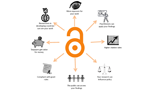
The future of open access, as the preferred alternative for publication of research results, was widely discussed at the Workshop on Alternative Open Access Publishing Models, held in October 2015 in Belgium. Learn about the participants’ innovative ideas and the recommendations of the European Commission to strengthen and facilitate this business model. The workshop report considers SciELO the most established among the models analyzed. … Read More →
Will your paper be more cited if published in Open Access?

Is there any positive relationship between open access and the amount of citations? Last year Academia.edu announced in its website that citations to papers in its repository could raise in percentages much higher than other repositories. Is it truth or exaggeration? … Read More →
Open access as a sustainable alternative to scholarly communication
The abusive price of scientific journals subscriptions, that triggered the open access movement in the 2000s, remains until today. The enormous financial pressure on academic libraries, research institutions and governments find alternative in open access business models. Innovative alternatives on open access publishing systems were created in several countries and a workshop organized by the European Commission brought together experts to discuss them. Get to know some alternatives. … Read More →
European Commission debates alternative approaches to open access
The Workshop on Alternative Open Access Publishing Models organized by the European Commission in October 2015 convened experts to discuss the future of open access as preferable publication model of research results, especially those financed by public funds. The meeting’s approach prioritized issues beyond the mere access to publications and resulted in fairer and more transparent alternative models aimed at increasing the dissemination and use of research by academia and other sectors of society. … Read More →


Recent Comments