




With more than half a century of continuous publication, RAE is a reference journal nationwide in the Administration area and since 2010, it has been investing to position itself internationally as well. In addition to the publication of articles in Portuguese, English and Spanish, RAE has been dedicated systematic efforts in expanding and strengthening its network of relationships via internationalization of its scientific committee and promotion of international calls for paper. … Read More →
ABEC Brazil and SciELO request the reformulation of the announced plan by CAPES to publicly finance publication of journals of Brazil by a foreign publisher

ABEC Brazil (the Brazilian Association of Scientific Editors) and the SciELO/FAPESP program are publicly requesting that CAPES suspend and reformulate its plan announced this past October 29th in order to fund the publication of a group of journals of Brazil by a foreign commercial publisher. In its place, it is proposed that the resources announced by CAPES to be made available to cover publication charges (Article Processing Charges) of articles by authors affiliated with Brazilian institutions published in quality journals published within the country. … Read More →
The winds of change are buffeting Alfa

With more than 50 years in existence as an academic journal, Alfa–Revista de Linguística achieved academic all-inclusiveness without stagnating. With the innovations promoted by the Editorial Executive, Alfa became a quarterly publication in 2014 and, in 2015, it will become bilingual, an important step towards the internationalization of its content. … Read More →
Exchange of research data remains low and increases slowly

The exchange of academic research data allows other scientists to replicate the experiments and move solidly in the construction of science. Although the major funding agencies in the world established in its policies the open availability of data, only a third of medical research, and much less in other areas comply with these provisions. There are several reasons that slow this progress, ranging from copyright and commercial interests to national security. … Read More →
Meeting considers how open access could address inequalities – Originally published in Research Information on October 19, 2014

Mark Patterson reports back from the COASP meeting that was held in Paris in September. The meeting presented a broad range of initiatives covering diverse geographical regions, subject areas and content types. The overarching sense was one of progress on a number of fronts, and the prospects for much greater change in the sphere of scholarly communication. … Read More →
Latin-American repositories have little visibility in Google Scholar

A recent study concerning the visibility of Latin American scholarly output in open access repositories reveals their poor indexing in Google and Google Scholar. The technical reasons for these problems, which affect the visibility of Latin-American research which, for the most part, is not indexed in either in WoS or Scopus, are explained in this post. … Read More →
The Open Data movement: international consolidation

The open data movement – the availability of scientific research data for preservation, searching, using and citing – is gaining followers in all sectors of the academic world, and with editors, publishers, research institutions and funding agencies. The movement will allow greater interoperability, transparency, visibility and research impact, in addition to ensuring the digital preservation of the original data that would otherwise have a tendency to be lost or become inaccessible with the passage of time. … Read More →
What are the Public Library of Science Collections ? – Part II

This post is the second part of the description of the contents of the PLOS Collections. Of the seven collections that makeup PLOS Collections, the Text Mining and Altmetrics collections have been selected for a brief analysis of their contents and their importance to scientometrics and information science, and of the growth of these disciplines that are bolstered by free access to full text. … Read More →
What are the Public Library of Science Collections ? – Part I

The PLOS Collections contain selected documents published in open access in seven subject disciplines. The contents and importance of these collections to the past, present and future of open access is briefly presented, as well as the growth of the disciplines of Text Mining and Altmetrics, stimulated by the open access to full text. … Read More →
What is the decline of the elite journals?
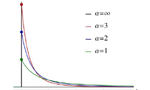
According to a study by Vincent Larivière of the Université de Montréal, there was an exponential increase in the number of articles published in the elite journals. However, it is now required twice the number of citations than in previous decades for an article to be in the top 5% with higher impact, and that these articles are distributed amongst a wider base of titles because authors have more independence in choosing where they publish. … Read More →
Study highlights academic journal publication models in Brazil and Spain

Brazil and Spain have a commanding profile in academic output in their respective regions, and possess great potential in the field of scholarly publishing. Notwithstanding the differences in the history of scientific development between the two countries, both have a similar number of journals in the Web of Science database and have developed successful open access models. This article highlights a study carried out by researchers from those two countries and gives an outline of these programs and the reasons behind their success. … Read More →
Experts give their opinion on Elsevier’s assault

In reaction to the DMCA requests sent out by Elsevier in December of last year to prevent articles which had been published in its journals from being made available on Web sites, the principal leaders in Open Access made their voices clearly heard. Among them were Steven Harnad, Charles Oppenheim and Richard Poynder where, in Poynder’s famous blog Open & Shut, they explain the different options that exist for an author to publish in repositories using the so called “Harnad-Oppenheim” solution. … Read More →
Publishing giants fight back – Elsevier goes author hunting
Last December Elsevier sent out thousands of e-mails to repositories of articles from scientific publications featuring open access articles that had been published in Elsevier journals, requesting that those articles be removed, by invoking the protection given to copyright holders granted by the Digital Millennium Copyright Act (DMCA). This raised an alarm in the academic community because it could be the start of similar actions by other commercial publishers. Voices have been raised in defense of the rights of authors, but sooner or later the researchers must decide whether the traditional publishing model is the one that best suits their interests. … Read More →
Scientific Data: Nature Publishing Group moves the communication of scientific data forward with its new online open access publication
The description and communication of research data is an integral part of the opening up of science and one which eScience adheres to; it is one of the specific SciELO action lines. Amongst the many initiatives which are in progress, it is the announcement made by Nature Publishing Group concerning the launch of the publication entitled Scientific Data which stands out. This publication is geared towards communicating the descriptions of scientific data files. … Read More →
Open-Data: liquid information, democracy, innovation… the times they are a-changin’

Open data are changing teaching, research and decision making. The Open Government registry registers more than 385 catalogs in 40 countries which offer more than one million open data-sets. Open data joins Open Access, Open Source and Creative Commons in a process of global change. A recent report from the McKinsey Global Institute concludes that the availability of Open data could increase trillions of dollars in economic value annually. … Read More →


Recent Comments