




PLOS, a pioneer of open access publishing in the years 2000, reports the results of its open peer review policy implemented in 2019. Published Peer Review History is the result of the reviewer’s choice to sign their peer review and the author’s choice to publish the Peer Review History, which consists of several documents. … Read More →
What are preprints? [Originally published in DADOS’ blog in May/2021]
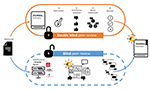
The traditional double-blind assessment model of scientific articles has been challenged in the last two decades by the so-called “preprint servers”. However, there are still many concerns in the Social Sciences about what preprints are and what changes they bring to the traditional framework of scientific assessment and publication. In this mini class, we seek to answer these questions from the experience of the journal DADOS. … Read More →
Editors opine on editorial policy and aspects of peer review

Peer review varies widely between journals and disciplines. A study recently published in eLife aimed to assess the posture of journal editors from five disciplines on their way of conducting peer review. The results suggest that peer review remains largely a closed practice, with some challenges from an ethical point of view. … Read More →
How to reduce the processing time of submitted articles: the experience of Revista Brasileira de Ciências Sociais

While the position of a scientific journal editor is interesting and rewarding, since it puts us in touch with the pulse of academic output, it also poses many challenges. It is necessary to give the journal a face, to guarantee the publication quality, to find reviewers willing to work anonymously and for free and to ensure the journal’s financial sustainability. This post deals with just one of the challenges: ensuring a quick response to the authors about the submitted manuscripts. … Read More →
Unlock ways to share peer review data
Peer review is the intrinsic process of scientific research. However, there are few systematic studies on this procedure, and it is not easy to gain access to management information administered by publishers. The PEERE project, funded by the European Community, would make this data available as a public good. … Read More →
Peer review is not just quality control, it is part of the social infrastructure of research [Originally published in LSE Impact of Social Sciences blog in June/2019]
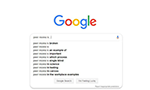
The purpose of peer review is often portrayed as being a simple ‘objective’ test of the soundness or quality of a research paper. However, it also performs other functions primarily through linking and developing relationships between networks of researchers. In this post, Flaminio Squazzoni explores these interconnections and argues that to understand peer review as simply an exercise in quality control is to be blind to the historical, political and social dimensions of peer review. … Read More →
A look at peer review of grant proposals
The scholarly peer review tracking platform Publons has launched the Grant Review in Focus on project assessment and identification for funding. Four thousand and seven hundred researchers were interviewed as well as data extracted from Web of Science. … Read More →
Tropical Medicine/Infectious and Parasitic Diseases journals align with open science editorial practices

Three of the most important journals in the areas of Tropical Medicine/Infectious and Parasitic Diseases of the SciELO Brazil Collection decided to adopt open science practices to provide more transparency, increase sharing and open access to the research results they report. This is the first of a series of novel pilot projects promoted by SciELO to inform editorial policies as well as to enable the management and operation of journals in the appropriation of and interoperability with preprints, research data and other content underlying the article texts for subsequent progressive opening of the peer review process. … Read More →
How to write an academic review? [Originally published in DADOS’ blog in July/2019]

The purpose of this post is to outline what a reviewer should consider before writing an assessment. In it, we discuss issues such as the importance of writing reviews, the types of possible reviews, what to do when detecting a conflict of interest, etc. … Read More →
Potential advantages and disadvantages in the publication of reviews

Publishing peer reviews is a growing trend in scholarly communication, for the sake of transparency and as a practice associated to open science. There are, however, advantages and disadvantages that should be considered by journal editors when adopting this peer review modality. … Read More →
Open peer review: Publishing peer review reports influences referee behavior?

A pilot study was conducted with five Elsevier journals in different areas of knowledge on the effects of publishing peer review reports of 9,220 articles submitted between 2010 and 2017. The main findings of the study suggest that the publication of reviews does not influence or compromise the peer review work. The authors were unable to detect any significant effect on the readiness to perform the evaluation, content and outcome of the recommendations, nor on the time taken to perform the evaluation. However, only 8.1% of the referees agreed to disclose their identity as authors of the review reports. … Read More →
From star peer reviewers to ghost peer reviewers – Part II

Open reviews and the emergence of platforms such as Publons, which publish these activities and integrate them into other academic tasks, open the possibility of the emergence of a new aspect of bibliometrics and certainly a new and prestigious market. … Read More →
From star peer reviewers to ghost peer reviewers – Part I

Peer review is an integral part of scholarly publishing and is carried out globally by most researchers in developed countries. To what extent researchers from emerging countries participate and which measures of their performance are reported in the result of the largest survey on peer review conducted so far. This note is the first of two on the subject. … Read More →
Scientific Publishing Innovations: the Future of Journals and Peer Review
On the first day of SciELO 20 Years Week, during the WG5 – Scientific Publishing Innovations and the Future of Peer Review and Journals, new methodologies for opening the publishing process using preprints servers were discussed throughout the day before an audience of more than 50 people and presentations of six experts. Text available only in Spanish. … Read More →
Challenges in peer review of scientific articles on Administration in Brazil

Sharing their experiences as authors, reviewers and editors of scientific journals, Sandro Cabral and Marcelo de Souza Bispo reflect on the challenges of the article evaluation process, criticize the current system that favors productivism, overloading the reviewers, and draws attention on the need to train good reviewers in PhD courses in Brazil. … Read More →


Recent Comments