




On December 31st 2019 the World Health Organization (WHO) was notified of the occurrence of a pneumonia outbreak in the city of Wuhan, Hubei Province, People’s Republic of China. The etiological agent was rapidly identified as a novel coronavirus: SARS-COV-2. The outbreak began in a seafood and live animals market and, as at the date of this publication, the animal reservoir is unknown. … Read More →
The value of mitigating epidemic peaks of COVID-19 for more effective public health responses [Originally published as an editorial in Revista da Sociedade Brasileira de Medicina Tropical vol. 53]

The emergence of SARS-Cov-2 virus in Wuhan, China, in December of 2019 led to a local epidemic that rapidly spread to multiple countries in the world, placing remarkable challenges in surveillance and control. In March 16th, 2020, WHO declared that the infection associated with SARS-Cov-2, named COVID-19, had spread to more than 100 countries, with more than 160,000 confirmed cases and more than 6,000 deaths globally. … Read More →
Unlock ways to share peer review data

Peer review is the intrinsic process of scientific research. However, there are few systematic studies on this procedure, and it is not easy to gain access to management information administered by publishers. The PEERE project, funded by the European Community, would make this data available as a public good. … Read More →
On the possibility of interrupting the coronavirus (COVID-19) epidemic based on the best available scientific evidence [Originally published in Rev. bras. epidemiol., vol. 23]
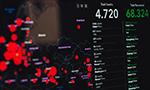
Evidence is piling up and there is still a chance to stop this epidemic. We cannot think that this virus will install itself among us and be just another agent responsible for the flu, because it has very high rates of transmission and its case-fatality is not low. China has managed to greatly reduce transmission mostly with three effective measures. … Read More →
The novel coronavirus (SARS-CoV-2) emergency and the role of timely and effective national health surveillance [Originally published in Cad. Saúde Pública, vol.36 no.3]

In recent years, the emergence and reemergence of infectious diseases like bird flu (influenza A H5N1) in 2003, SARS in 2002/2003, influenza A (H1N1) in 2009, and Zika in 2015 raised numerous questions on the role of epidemiological surveillance. Pandemics have occurred more frequently, and since 2018, the World Health Organization (WHO) has acknowledged the need for preparation in anticipation of the emergence of novel pathogens, including (under the name “disease X”) unknown diseases with potential for international emergence on the priority list for research and development in the emergency setting. … Read More →
The Coronavirus (COVID-19) outbreak highlights serious deficiencies in scholarly communication [Originally published in the LSE Impact blog in March/2020]

As research and government responses to the COVID-19 outbreak escalate in the face of a global public health crisis, Vincent Larivière, Fei Shu and Cassidy R. Sugimoto reflect on efforts to make research on this subject more widely available. Arguing that a narrow focus on research published in high ranking journals predominantly in English has impeded research efforts, they suggest that the renewed emphasis on carrying out open research on the virus presents an opportunity to reassess how research and scholarly communication systems serve the public good. … Read More →
The Road to Preprints (Part 2): SciELO’s Preprint Server [Originally published in the PKP website in March/2020]

Our preprints story continues with a guest post by SciELO. In addition to seed funding to make Open Preprint Systems (OPS) possible, SciELO is working closely with the PKP team to make sure that the software is developed and maintained following state-of-the-art best practices and that its features satisfy the needs of a diverse community. … Read More →
The Road to Preprints (Part 1): Introducing Open Preprint Systems [Originally published in the PKP website in February/2020]

Our story begins in February 2017 when SciELO first announced their quest for a preprint server. Like many circa 2016, SciELO was coming around to the idea that preprints could and would serve an important part in their strategy for open science. But despite a clear vision and path to get there, SciELO was missing an important piece: infrastructure. … Read More →
What do researchers think about their cultural work environment?

Policies, incentives, evaluation processes, leadership approaches… are they undermining scientific research? A quantitative online survey of more than 4,200 researchers conducted by the Wellcome Trust foundation of the United Kingdom seems to show clear evidence that there are widespread problems in the research culture. Those who finance, publish, evaluate or conduct research can now use this evidence as a starting point to implement solutions. However, are these human management problems with scientific research staff different from other fields of activity, such as work or sports? … Read More →
Brazilian Journal of Nephrology: trajectory and internationalization

With 40 years of uninterrupted publication, Brazilian Journal of Nephrology traces the path towards its internationalization, based on professionalization and without constant improvement of its editorial processes and scientific quality. It is now in a new phase, where reaching its greatest indexing potential and strengthening its presence in Latin America represent its main challenges. … Read More →
Sorbonne declaration on research data rights [Originally published in the LERU website in January/2020]

The opening of research data is one of the practices of open science that is progressively being globalized. In November 2019, the Network of Scientific Data Repositories of the State of São Paulo, formed by eight universities and research institutions, was launched. In January 2020, leaders of eight university networks gathered at the International Research Data Rights Summit at Sorbonne Université signed the Sorbonne Declaration on Research Data Rights, which is reproduced in this post in the original English version. … Read More →
Posting preprints before peer review is associated with increased visibility and citation of published articles

The communication of research results through preprints has been increasing significantly, as by the increasing number of manuscripts deposited on bioRxiv, the preprint server for biology and life sciences. However, only a small fraction of the research papers indexed in PubMed started as preprints in bioRxiv. But what would undecided authors about preprints say if they knew that articles that have associated preprints have a 49% higher Altmetric index and 36% more citations? This is what shows a recent study published in eLife. … Read More →
CRediT Check – Should we welcome tools to differentiate the contributions made to academic papers? [Originally published in LSE Impact of Social Sciences blog in January/2020]

Elsevier is the latest in a lengthening list of publishers to announce their adoption for 1,200 journals of the CASRAI Contributor Role Taxonomy (CRediT). Authors of papers in these journals will be required to define their contributions in relation to a predefined taxonomy of 14 roles. In this post, Elizabeth Gadd weighs the pros and cons of defining contributorship in a more prescriptive fashion and asks whether there is a risk of incentivising new kinds of competitive behaviour and forms of evaluation that doesn’t benefit researchers. … Read More →
Peer review is not just quality control, it is part of the social infrastructure of research [Originally published in LSE Impact of Social Sciences blog in June/2019]

The purpose of peer review is often portrayed as being a simple ‘objective’ test of the soundness or quality of a research paper. However, it also performs other functions primarily through linking and developing relationships between networks of researchers. In this post, Flaminio Squazzoni explores these interconnections and argues that to understand peer review as simply an exercise in quality control is to be blind to the historical, political and social dimensions of peer review. … Read More →
The SciELO publication model as an open access public policy

This post shares the brief description of the SciELO open access publication model presented by Abel L Packer, Director of SciELO, at the 14th Berlin Debate on Science and Science Policy which was themed “Who Owns Science? Reshaping the Scientific Value Chain in the 21st Century”. The description highlights the SciELO Program as a framework for the development and implementation of national policies to support quality journals and as an international cooperation program. The debate was held in the context of the Falling Walls Conference commemorating the 30th anniversary of the fall of the Berlin Wall. … Read More →


Recent Comments