




Scholarly communication available online, whether in journals or repositories, adds up to millions, and this figure grows every year. What browser efficient tools are available to researchers, librarians, students, and the like to find the open-access versions of the articles that interest them? … Read More →
Grant applications submitted to the NIH can cite preprints
The use of preprints as a means of accelerating research communication has become a frequent practice in many areas of knowledge also as a way to improve peer review. The U.S. National Institutes of Health, a renowned research and development agency, recently announced that grant applications and reports are entitled to cite preprints, “to speed the dissemination and enhance the rigor of their work”. … Read More →
Gender disparities in science persist despite significant advances
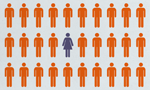
The participation of women as authors in academic publications has been increasing significantly worldwide and in all areas of knowledge, reaching 49% in Brazil and Portugal, followed by Australia (44%) and the European Union (41%). Gender equity in science, however, still has a long way to go, especially in the editing and peer review functions. A study of more than 41,000 articles published between 2007 and 2015 shows that male editors – who are majority – preferentially select same gender referees. … Read More →
Openness is the only quality of an academic article that can be objectively measured

Quality of scientific research articles is a widespread preoccupation in academic circles. The most used proxy is based on citation counts, not of the article itself, but of the averages of articles appearing in the same journal during a given time window. This is known as the Journal Impact Factor, which may be objective within its own definition, but utterly lacks objectivity with regard to scientific quality of individual articles. Only some technical qualities of articles can be assessed at the time of their publication, and, significantly, their openness, the degree to which the research results they describe can be immediately and universally shared. … Read More →
Editors of Brazilian journals – a hard life that is getting harder! [Originally published as the editorial in Anais da Academia Brasileira de Ciências vol. 89 no. 1]
The financing of journals of Brazil can be improved by extending the validity period of research grants, in order to allow publishers a better plan for articles publication. An editorial written by Alexander Kellner in the first issue of 2017 of Anais da Academia Brasileira de Ciências examines the challenge faced by editors of journals of Brazil and highlights their hard work in attracting relevant manuscripts, seeking to achieve ever greater levels of excellence and internationalization. … Read More →
Plain-language summaries of research: Something for everyone [Originally published in eLife]

More than 50 journals and scientific organizations produce a wide variety of plain-language summaries that are available for research in many different areas of science and medicine. Plain-language summaries can help biomedical science journals to reach patients and others who may benefit from the research. This diversity means that there will always be something available to all those interested in science, regardless of their scientific background. … Read More →
Are we in the GSM Radar?
Google Scholar Metrics (GSM) offers alternative metrics to the JCR Impact Factor and the SJR, namely the h-5 index. To enter this world ranking that covers more than 40,000 journals it is only necessary to publish an average of 20 articles per year and be cited. However, there are hundreds of journals (our journals) that are not being indexed in GSM. They’re off Radar. … Read More →
I wrote this… I did not write this… now I write something else…
The emerging system of online scholarly communication incorporates a technological and ideologically approach different from the traditional one, where the articles initially appear as preprints versions and are modified until reaching the final version. In case of errors, these same technologies provide efficient opportunities to make partial or total corrections and even retractions, associating to the path of a document the history of its versions. It is time, therefore, to establish methodologies that allow to obtain the maximum of more updated information to support the scientific undertakings. … Read More →
Internationalization as an indicator of journal performance in Brazil: the case of Psychology

The path to strengthening scientific publications almost always goes through internationalization. Publishing in English, however, is not enough to reach a truly global audience and indices comparable to the most prestigious journals. A study on the degree of internationalization of Brazilian psychology journals shows how to walk this path. … Read More →
Assessment of reproducibility in research results leads to more questions than answers

The ‘Reproducibility Project: Cancer Biology’ initiative that has the purpose of assessing the reproducibility of preclinical research in Oncology was launched in 2013 as the result of a collaboration between the Center for Open Science and Science Exchange. The first results of the replication studies have just been published, however, their interpretation requires a careful approach. … Read More →
Preprints – the way forward for rapid and open knowledge sharing
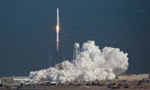
Preprints – versions of academic articles that have not yet been formally peer-reviewed before publication – are gaining acceptance in the academic world. They deliver open access as well as speedy publication, and their decades old success in physics has spurred on their spread in other disciplines. The development of preprints is accelerating; important funding agencies are in support of them, and also SciELO is planning to set up a preprint server for authors in Latin America and the Global South generally. … Read More →
Study assesses financing sources of open-access article processing charge

Is there a correlation between article processing charge (APC) and the journals’ Impact Factor? What are the funding sources for payment and how do they influence the choice of journals for publication? These and other questions were investigated by authors from Nanjing University, China and the results explain the peculiarity of open access in different countries. … Read More →
Five things to consider when designing a policy to measure research impact [Originally published in The Conversation]

The move of the Australian government to measure the impact of university research on society introduces many new challenges that were not previously relevant when evaluation focused solely on academic merit. … Read More →
Adoption of open peer review is increasing
In analyzing how the ‘peer review’ institution has emerged and evolved, it is possible to understand the current transition the assessment process is going through towards greater openness, transparency and accountability. … Read More →
Open Access article processing charges: a new serial publication crisis?
The financial and ethical implications that emerge from open access publishing through article processing fees in India are analyzed in a study that proposes the creation of a national open access journal platform such as SciELO in order to reduce costs, increase efficiency and facilitate the sharing of metadata among repositories. … Read More →


Recent Comments