




A country’s role in global science is often assessed using indicators such as the proportion of articles involving international collaboration, the frequency of these collaborations, and the number of international partners. These indicators are useful, but they do not answer important questions: Who leads these collaborations? What is their impact? And which scientific agendas do they address? … Read More →
Artificial Intelligence in the Writing of Scientific Articles: Guidelines for Ethical and Responsible Use

Generative AI is transforming academic writing, but it also poses challenges such as shallow content, fabricated data, and editorial overload. Editors warn of ethical limitations, the need for human responsibility, and the need to guide authors in adopting best practices when using AI.
Guidance on Research Misconduct for U.S. Public Health Service Policies Involving Generative Artificial Intelligence

The use of Generative Artificial Intelligence in academic activities, as well as in various aspects of human life, has been increasing significantly in recent years. Given the countless possibilities offered by these technologies, there has been a need to establish guidelines for their use in scientific research. This post provides a summary of the document recently published by the Office of Research Integrity at the U.S. Department of Health and Human Services. … Read More →
From Peer Review to the Emergency Room: The Dangerous Path of Fabricated References

This reflection aims to discuss the limitations of peer review and editorial control mechanisms in detecting fabricated references, present objective evidence of the occurrence of this phenomenon, and examine possible measures for prevention, correction, and accountability. … Read More →
How Can SciELO Journals Increase Their Impact?

For many years, the prevailing perception was that scientific journals published in developing countries would inevitably have limited impact when compared to major international journals. This view helped reinforce a scholarly communication system in which prestige, visibility, and recognition were concentrated largely in North America and Europe. … Read More →
The Future of the Scientific Article in the Age of AI

The current model of scientific publishing has ceased to be a means of producing scientific articles and communicating discoveries and has instead become a tool for bureaucratic exchange aimed at promoting individuals and/or institutions.
By measuring a scientist’s value by the volume of their publications rather than the rigor of their data, the system has created the perfect conditions for vulnerability, allowing AI-driven automation to trigger a crisis of editorial overproduction and jeopardize the credibility of science itself.
… Read More →
Making research communication more equitable and effective: six levers to support preprint sharing [Originally published in the INASP blog in June/2026]
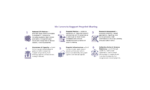
Although most policymakers and research funders are committed to Open Access, many have not yet recognized the sharing of preprints as a key solution to the shortcomings of the current publishing system. INASP’s new policy paper outlines six measures to help policymakers and research funders support the sharing of preprints and drive change in the scientific publishing system. … Read More →
Even standing on the shoulders of giants, science is taking a step backward

The text examines the growing perception of a decline in the quality of contemporary scientific output, situating this phenomenon within the context of institutional pressures—such as the “publish or perish” culture—and the potentially inappropriate use of artificial intelligence. Available only in portuguese.
… Read More →
Something big is happening in the global scientific community, and Brazil seems to be left out again

Recent advances in artificial intelligence are reshaping global scientific output, with significant gains in productivity and the automation of complex tasks. While researchers abroad are already experimenting and redefining their practices, Brazil continues to see little discussion, limited access, and an excessive focus on regulation. The result could be a deepening of scientific inequalities, requiring a rapid response based on experimentation, the dissemination of best practices, and access policies. Available only in Portuguese.
“Zombie” and “ghost” references in AI – how they differ and how they arise

Two distinct types. One type is “ghost citations” (reference hallucinations), one of the most curious and frustrating phenomena in generative AI. Basically, the AI invents an author, a book title, or a web link that appears entirely legitimate but does not exist in the real world. The other, “zombie citations,” arise because they perpetuate references to real authors who were retracted [whether deleted or not] from the original databases, and due to shortcomings in programs like Google Scholar, they continue to be cited. Available only in Spanish. … Read More →
Diogenes’ lantern and the researcher’s self-examination: scientific integrity under pressure

Using the metaphor of Diogenes’ lantern, Ricardo Limongi and Marcio Pimenta discuss contemporary scientific practice. More than merely offering a critique, the image of the lantern invites a deeper reflection: how to turn the light inward, engaging in self-examination, ethical responsibility, and integrity while confronting a context that is often unfavorable to researchers in Brazil. … Read More →
Sycophancy in AI: the risk of complacency

Sycophancy is a behavior exhibited by artificial intelligence since it prioritizes agreeing with the user rather than the truthfulness of the facts. This tendency arises from training processes designed to maximize human satisfaction, which can validate serious errors in critical sectors such as healthcare. The behavior, described as a form of “digital flattery”, means that AI can validate errors, reinforce biases, or avoid necessary criticism in order to be pleasant or useful according to the user’s immediate perception. To mitigate these risks, strategies such as ethical fine-tuning, the design of systems that encourage dissent, and the use of prompts that are neutral with respect to users have been proposed.
… Read More →
The professor’s dilemma in the age of AI: do we teach the prompt or the scientific process?

The question is not trivial. The adoption speed of generative AI tools in scientific research has generated a legitimate demand for technical training. Researchers want and need to know how to use these technologies. The problem arises when training is reduced to teaching shortcuts, without understanding the underlying processes that give researchers the ability to critically evaluate what the tool produces. … Read More →
What the FIL Guadalajara debates reveal about metadata for academic books and how Thoth Open Metadata and SciELO Books respond to this challenge [Originally published in the Thoth blog in January/2026]

In early December, FIL Guadalajara 20251(Feira Internacional del Libro 2025) took place, one of the main international events in the Latin American publishing sector. Among the various professional activities at the fair, the Encuentro de Editores Universitarios Iberoamericanos (Ibero-American University Publishers Meeting) stood out, in which Thoth Open Metadata participated, bringing together university publishers, researchers and representatives of publishing infrastructures to discuss the challenges and opportunities of academic publishing in the region. … Read More →
Transformative agreements in Brazil: necessary progress or increased dependence?

This text proposes an analysis of transformative agreement policy, considering three dimensions: the international context of criticism, the experiences of countries and institutions that have opted for alternative paths, and Brazil’s unique position as a historical leader in non-commercial open access through the SciELO Network.
… Read More →


Recent Comments