




Two distinct types. One type is “ghost citations” (reference hallucinations), one of the most curious and frustrating phenomena in generative AI. Basically, the AI invents an author, a book title, or a web link that appears entirely legitimate but does not exist in the real world. The other, “zombie citations,” arise because they perpetuate references to real authors who were retracted [whether deleted or not] from the original databases, and due to shortcomings in programs like Google Scholar, they continue to be cited. Available only in Spanish. … Read More →
Sycophancy in AI: the risk of complacency

Sycophancy is a behavior exhibited by artificial intelligence since it prioritizes agreeing with the user rather than the truthfulness of the facts. This tendency arises from training processes designed to maximize human satisfaction, which can validate serious errors in critical sectors such as healthcare. The behavior, described as a form of “digital flattery”, means that AI can validate errors, reinforce biases, or avoid necessary criticism in order to be pleasant or useful according to the user’s immediate perception. To mitigate these risks, strategies such as ethical fine-tuning, the design of systems that encourage dissent, and the use of prompts that are neutral with respect to users have been proposed.
… Read More →
Does Artificial Intelligence have hallucinations?

AI applications have demonstrated impressive capabilities, including the generation of very fluent and convincing responses. However, LLMs, chatbots, and the like, are known for their ability to generate non-objective or nonsensical statements, more commonly known as “hallucinations.” Could it be that they are on drugs? Available in Spanish only. … Read More →
Can AI do reliable review scientific articles?

The cost of reviewing scientific publications, both in terms of money and time spent, is growing to unmanageable proportions with current methods. It is necessary to use AI as a trust system and thus free up human resources for research tasks. It would be important for SciELO to progressively incorporate AI modules for evaluation in its preprints server as a new advance and development of the technologies it manages. Available in Spanish only. … Read More →
Research and scholarly communication, AI, and the upcoming legislation
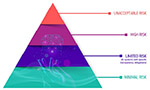
Can AI be used to generate terrorist “papers”, spread deadly viruses, or learn how to make nuclear bombs at home? Is there legislation that can protect us? It looks like international regulation is on the way. … Read More →
AI: How to detect chatbox texts and their plagiarism
The ChatGPT-3 application is consulted on four topics under discussion for the production of academic texts acceptable to scientific journal editors. Each question is followed by the answer given by the OpenAI application itself and then by our evaluation, consulting recent sources published on the Internet. Finally, some (human) reflections are presented which, like all things, are subject to discussion or changes brought about by advances in technology. … Read More →
Artificial Intelligence and research communication

Are chatbots really authors of scientific articles? Can they be legally responsible, make ethical decisions? What do scientific societies, journal editors and universities say? Can their results be included in original scientific articles? Based on recent contributions hereby presented, we’ll be publishing posts that will try to answer these questions and any new ones that arise. … Read More →
GPT, machine translation, and how good they are: a comprehensive evaluation
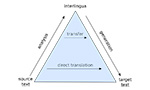
Generative artificial intelligence models have demonstrated remarkable capabilities for natural language generation, but their performance for machine translation has not been thoroughly investigated. A comprehensive evaluation of GPT models for translation is presented, compared to state-of-the-art commercial and research systems, including NMT, tested with texts in 18 languages. … Read More →
Reproduction and replication in scientific research – part 3

Reproducibility and replicability are central issues when discussing the reliability of scientific research. The attempt by a second researcher to replicate a previous study is an effort to determine whether applying the same methods to the same scientific question produces similar results. In the social sciences and humanities, however, it is not the same paradigms. … Read More →
Reproduction and replication in scientific research – part 2
In this second note on the subject, we will address the guidelines proposed in 2019 by NASEM. We will analyze how replicability is understood in different scientific disciplines, mainly in the experimental sciences, based on a computational paradigm. Likewise, we will look at opinions from other disciplines related to social sciences and medicine, which do not participate in the same epistemological paradigms. … Read More →
Reproduction and replication in scientific research – part 1

Replicability is a central issue when discussing the reliability of scientific research that renews itself in the promotion of open science. A second researcher’s attempt to replicate an earlier study is an effort to determine whether applying the same methods to the same scientific question yields similar results. … Read More →
Shuffle the cards and deal again

Research must be well planned, carried out correctly and reported in a clear and transparent way, as the reliability of the results depends on the rigor of the experimental design. However, in the published reports, there seems to be a lack of commitment by those responsible for assessing the quality of the research. Experts pointed out that the current incentive structures in research institutions do not sufficiently encourage researchers to invest in solidity and transparency, instead encouraging them to optimize their aptitude in the fight for publications and grants. Over the past decade, large-scale replication studies have shown that reproducibility is far from favorable in many scientific fields, and questionable research practices are becoming more prevalent. Clearly something is not working in the scientific enterprise. … Read More →
Open Access and Closed Research. Who benefits from the APC?

Recent research published in Scientometrics raises questions about unforeseen consequences of the spread of Open Access scientific publishing that have to do with the growth of total expenditures and who would be the economic beneficiaries of this paradigm shift. … Read More →
Society has a strong demand for open access science

Analysis of more than 1.6 million comments left on downloads by the US National Academies shows that half are for academic use and the other half reveal adults across the country who seek highest quality information to improve the way they work, satisfy their curiosity, and learn. Knowing the importance of such information, policymakers should be encouraged to protect it. … Read More →
The latest blows from predatory (or pirate) journals
Piracy and, specifically, scams by predatory publishers are growing around the world, becoming a growing concern in academic publishing, drawing the attention of the most serious publishers. This problem is not so serious in Latin American scientific publications. Post available only in Spanish. … Read More →


Recent Comments